


In the large-scale production of pre-packaged flexible meals, pre-cooked vegetable sterilization safety and freshness preservation remain a core challenge. Conventional high-temperature, long-duration sterilization methods often face difficulties such as inadequate temperature control, uneven heating, and difficulty in precisely matching pressure. This can easily lead to two scenarios: insufficient sterilization control fails to meet shelf-life requirements, or prolonged high-temperature cooking causes food to become soggy, lose juices, lose flavor, turn yellow in vegetables, and become fragmented in meat, resulting in quality degradation.
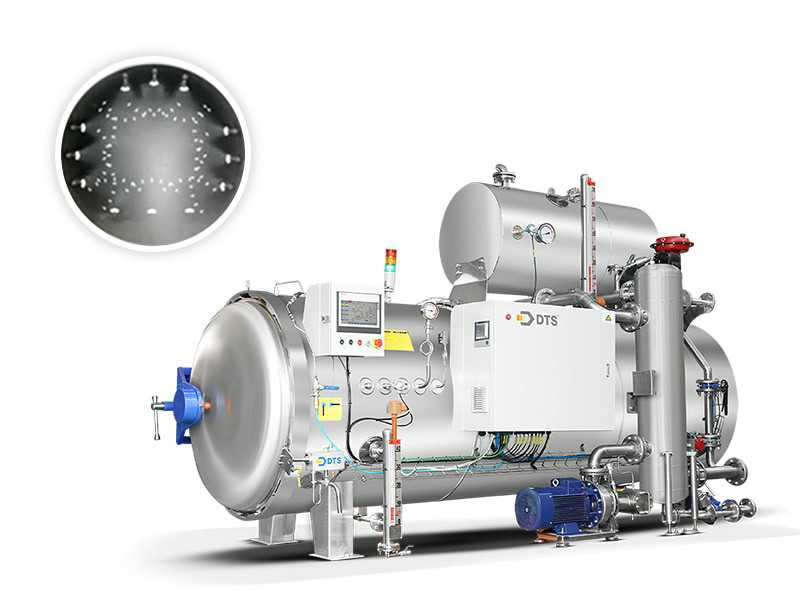
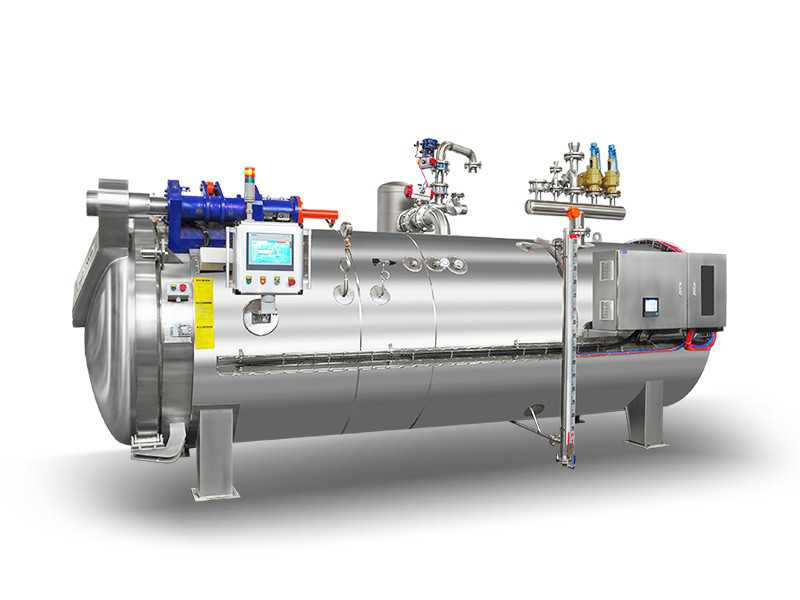
DTS has customized a high-temperature, short-duration, precise temperature control, and constant-pressure sterilization process specifically for transparent retort pouches, aluminum foil bags, and vacuum-packed flexible meals. This process is compatible with various types of sterilization autoclaves, including water baths, spray systems, and rotary sterilizers, achieving a balance between commercial aseptic standards and optimal food taste.
Key Takeaways
High-temperature short-time (HTST) retort sterilization for pre-cooked vegetables reduces overcooking while achieving commercial sterility, with internal temperature precision controlled to ±0.5°C.
Intelligent dynamic backpressure technology protects flexible pouches from bulging or breakage throughout heating and cooling, locking in juice and original flavor.
Real-time F₀ value monitoring terminates the high-temperature holding stage once the target lethality is reached — the industry-standard measure for Clostridium botulinum inactivation in low-acid foods.
The process supports water bath, water spray, and steam-air retort machines, as well as rotary sterilizers for high-viscosity soups and prepared dishes.
One-click recipe recall and full batch traceability of temperature, pressure, and F₀ data help enterprises meet food safety system standards and reduce batch-to-batch variation.
I. Core Technology: High-Temperature Sterilization Prevents Sogginess, Multi-Dimensional Freshness Locking and Flavor Preservation
1. Multi-Stage Temperature Control: High-Temperature Short-Time Sterilization Reduces Overcooking
The entire system is equipped with DTS's self-developed intelligent temperature control system, supporting customized stepped heating programs. The internal temperature error is precisely controlled within ±0.5°C. The process first uses low-temperature preheating to expel air from the internal chamber, allowing heat to slowly penetrate the food, preventing damage from sudden heat to the packaging bag and food surface. Then, the temperature is precisely increased to the sterilization temperature according to the type of food. Relying on a real-time F₀ value monitoring system, the high-temperature holding stage is terminated once the target is reached, significantly shortening the time the food is in the high-temperature range. Short-time high temperature can kill harmful bacteria such as Clostridium botulinum, mold, and E. coli, while largely preserving the original texture of the food.
For low-acid pre-cooked vegetables (pH > 4.6), regulatory guidance requires a minimum thermal process equivalent to a 12D reduction of C. botulinum spores — commonly expressed as an F₀ value of at least 3 minutes at 121.1°C. DTS's real-time lethality monitoring ensures each batch meets or exceeds this threshold without unnecessary overprocessing.[1][2]
2. Intelligent Dynamic Backpressure Technology: Locks in Juice and Protects the Bag to Retain Original Flavor
DTS's exclusive process is equipped with an intelligent pressure regulation system that dynamically matches the pressure inside and outside the bag throughout the entire process of heating, temperature control, and cooling, ensuring stable pressure fluctuations throughout. Pre-pressurization during the heating phase counteracts the expansion tension within the bag, ensuring a smooth, wrinkle-free packaging with a tight, crack-free seal. The cooling phase employs gradual temperature reduction and pressure release to better preserve the freshly made taste. This overpressure control is especially critical for flexible retort pouches and aluminum foil bags used in pre-cooked vegetable packaging, where pressure imbalance is a leading cause of package deformation and seal failure.[3]
3. Fully Enclosed, Clean Heat Exchange — Odorless and Pollution-Free
The process utilizes indirect heat exchange, ensuring no impurities or odors seep into the food throughout the entire process. A sophisticated high-temperature sterilization process, combined with standardized production management, helps companies achieve room-temperature storage with appropriate formulations. This enables companies to create clean-formulated products that meet consumers' demands for the original flavor of ingredients, guaranteeing pure flavor from the source and reducing the generation of musty or metallic odors from cooking.
II. Customized Process Solutions for All Product Categories, Adaptable to Various Soft-Packaged Pre-Cooked Dishes
Utilizing a 121°C high-temperature sterilization process, the stepped heating reduces heat damage to the meat, quickly achieving the required sterilization value. The finished product has a stable shelf life of 6–12 months. For viscous soups and pre-cooked dishes, a low-speed dynamic rotation sterilization process is used, continuously circulating the broth to prevent ingredients from settling and gelatinizing at high temperatures. Solid ingredients are heated evenly and retain their shape, resulting in a thick, clear broth without layering or burnt odors, improving the problems of difficult sterilization and poor taste associated with high-viscosity products.
| Product Category | Recommended Retort Mode | Key Process Feature | Target Outcome |
|---|---|---|---|
| Solid pre-cooked vegetables (corn, peas, carrots) | Water spray / steam-air retort | Stepped heating, ±0.5°C precision | Color retention, no yellowing, crisp texture |
| Meat & vegetable mixed dishes | Water bath / spray retort | Dynamic backpressure, F₀ real-time monitoring | Meat tender, vegetable intact, juice locked |
| High-viscosity soups & porridges | Rotary sterilizer (low-speed) | Continuous circulation, anti-settling | Uniform heating, no layering or burnt odor |
| Sauces & condiments | Steam-air retort | Rapid come-up time, independent T/P control | Short cycle, consistent flavor, stable shelf life |
III. Advantages of Mass Production Implementation, Helping Enterprises Improve Quality and Efficiency
1. Stable and Controllable Quality
One-click storage and recall of recipes; automatic recording and traceability of temperature, pressure, and F₀ value data for all batches, meeting food safety system standards, reducing batch quality differences, and ensuring highly consistent product quality.
2. Reduced Production Losses
Intelligent reverse pressure bag protection technology improves issues such as bag bulging, breakage, and wrinkling, helping to improve finished product quality and reduce production losses and rework costs.
3. High Efficiency, Energy Saving, and Increased Production
High-temperature short-time sterilization mode shortens the single-pot production cycle; combined with a high-efficiency heat circulation system, it helps to improve the production line's processing capacity while saving energy and reducing consumption, adapting to large-scale standardized mass production for enterprises.
4. Flexible Adaptability to Multiple Processes
The sterilization process can be flexibly switched between different categories such as meat and vegetables, soups and porridges, and sauces, adapting to the new product iteration and multi-category production needs of pre-prepared food enterprises; it is highly versatile and easy to debug.
Need a Customized Pre-Cooked Vegetable Sterilization Solution?
DTS provides end-to-end retort sterilization solutions for flexible-pouch prepared vegetables — from process validation and F₀ value testing to equipment installation and staff training. Get a tailored proposal for your production line.
Send Inquiry & Get a Free QuoteDTS's special sterilization process for soft-packaged pre-prepared vegetables is supported by hard-core equipment technology and focuses on food quality. It strives to solve the pain points faced by many pre-prepared vegetable production companies that are difficult to balance sterilization and freshness-locking. Relying on the systematic process plan of precise temperature control, dynamic heat equalization, and intelligent pressure protection, it helps companies achieve effective sterilization, retain the rich taste and pure flavor of ingredients, and reduce production losses, creating a high-quality, cost-effective, and highly stable standardized sterilization production solution for soft-packaged prepared vegetable companies.
References
U.S. Food and Drug Administration. 21 CFR Part 113 — Thermally Processed Low-Acid Foods Packaged in Hermetically Sealed Containers. eCFR. https://www.ecfr.gov/current/title-21/chapter-I/subchapter-B/part-113
Food and Agriculture Organization of the United Nations. Canning Principles — Heat Resistance of Bacterial Spores and F₀ Value Calculation. FAO Fisheries Technical Paper. https://openknowledge.fao.org/server/api/core/bitstreams/25f2a733-0dc2-45da-a5c5-259f1a3aeef6/content/R6918E02.htm
Singh A, et al. Understanding Retort Processing: A Review. Food Science & Nutrition, 2024. PMC. https://pmc.ncbi.nlm.nih.gov/articles/PMC10916645/


