


Retort Sterilization for Tinplate Canned Pet Soup
When a pet owner pulls open a ring-tab tin of chicken and pumpkin soup, the rich aroma that greets them is delivered by more than good recipes—it is protected by retort sterilization. As pet food formats grow more diverse, tinplate cans have become a popular choice for pet soup thanks to their excellent sealing performance and light-blocking properties. For manufacturers, the challenge is keeping that soup nutritious, flavorful, attractive, and shelf-stable after sterilization.
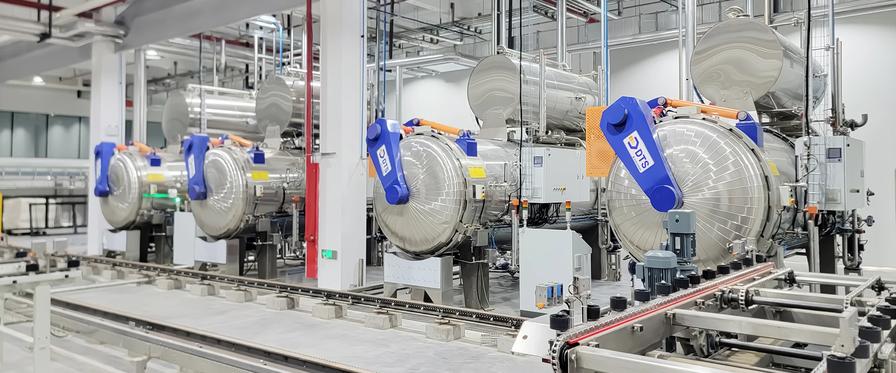
Steam retorts heat sealed cans directly with steam, enabling rapid and uniform heat transfer without an intermediate water medium
Precise temperature and pressure control protects both food safety and product texture in gelatin- and fat-rich pet soups
Commercial sterility allows ambient shelf life of 6–12 months without preservatives
Real-time compressed-air pressure compensation prevents tinplate can deformation and label damage
PLC-based systems support customized multi-stage heating profiles for different recipes
Proven in automated wet pet food production lines for leading producers worldwide
Key Takeaways
Retort sterilization is a thermal process that makes sealed canned pet food commercially sterile, killing bacteria, molds, and pathogens while preserving nutrition and flavor.
Tinplate cans combine strong sealing, light protection, and mechanical strength, making them well suited to high-temperature retort processing of pet soup.
Direct steam sterilization heats cans rapidly and evenly, reducing the risk of under-sterilized cold spots and post-process can swelling.
For pet soup rich in gelatin and fat, controlled sterilization helps minimize gelatin separation and keeps the texture stable.
PLC-controlled temperature profiles support commercial sterility while limiting protein change and fat oxidation that affect taste.
Compressed-air pressure compensation prevents can deformation caused by pressure differences during heating and cooling.
Shelf-stable wet pet soup typically achieves 6–12 months of ambient shelf life without added preservatives when properly sterilized.
Equipment certification (pressure vessel standards), documented thermal distribution, and validation records matter when choosing a sterilization supplier.
Why Tinplate Cans Suit Pet Soup
Pet soup is a wet food with high moisture content, which makes it vulnerable to microbial spoilage unless properly processed. Tinplate cans address this challenge in three ways. First, the double-seamed metal closure provides a hermetic seal that keeps oxygen and microorganisms out after sterilization. Second, the opaque steel wall blocks light, protecting heat-sensitive vitamins and preventing light-induced flavor changes. Third, the rigid metal body withstands the internal pressure of retort processing and protects the product through transport and storage. These properties make tinplate cans one of the most reliable packages for long-shelf-life wet pet food.
Note: Tinplate is steel coated with a thin layer of tin, which gives corrosion resistance while keeping the container rigid and economical. The food-contact surface is further protected by an internal lacquer selected for compatibility with the product.
What Is Retort Sterilization?
Thermal Processing Basics
Retort sterilization is a high-temperature thermal process applied to packaged foods to achieve commercial sterility. Sealed cans are heated inside a pressure vessel (the retort) to a defined temperature and held for a defined time, calculated from the product's heat penetration characteristics and the target microorganisms. The time–temperature combination is expressed as a sterilization value (F0) for low-acid foods, representing the equivalent lethal effect at 121.1°C. Achieving commercial sterility means the product contains no microorganisms capable of reproducing under normal storage conditions—without relying on refrigeration or preservatives.
Note: Thermal processing science is well established and regulated worldwide. International food safety frameworks, such as those supported by the Food and Agriculture Organization of the United Nations (FAO), treat retort sterilization as a validated control step for low-acid canned foods.
How a Steam Retort Works
In a steam retort, saturated steam enters the vessel and comes into direct contact with the can surface. Because steam condenses on the cooler metal surface, it releases latent heat rapidly—much faster than water as an intermediate medium. This direct heating mechanism produces quick temperature rise, efficient heat transfer, and uniform temperature distribution across the load. Uniform heating matters because any under-heated zone could allow surviving microorganisms, and in fat- and gelatin-rich pet soups local cold spots are a real risk. Direct steam sterilization helps reduce the risk of post-process can swelling caused by inadequate sterilization in localized areas.
Key Sterilization Parameters
Every retort process is defined by four interacting parameters. Product developers set them according to recipe, can size, fill weight, and target microorganisms:
| Parameter | Typical Range (Wet Pet Soup) | Role |
|---|---|---|
| Sterilization temperature | 115–121°C | Determines microbial lethality rate; higher temperature shortens required hold time |
| Hold time | Minutes, defined by F0 target | Provides cumulative lethal effect across the can's cold point |
| Sterilization value (F0) | Typically ≥ 3 for low-acid wet foods | Equivalent minutes at 121.1°C; the process validation baseline |
| Counter-pressure | Adjusted during heating and cooling | Balances internal can pressure to prevent deformation or seam stress |
Note: Values above are industry-typical references for canned pet wet food; the exact process must be validated for each product, can size, and fill by heat-penetration tests and microbiological challenge studies.
Why Steam Retorts Fit Tinplate Pet Soup
Handling Gelatin and Fat
Pet soup is often rich in gelatin and fat, which changes how heat moves through the can. Fat conducts heat slowly, and gelatin-rich liquid can form viscous layers that slow convection. If heating is uneven, some areas may reach sterilization temperature late, while others may be over-heated, causing gelatin separation and texture loss. Direct steam retorts respond quickly to temperature set-point changes, helping operators hold a narrow processing window so the entire load receives similar heat input. This contributes to minimizing gelatin separation and maintaining a uniform, stable product texture.
Uniform Heat Distribution
Uniform heat distribution across the retort load is a core quality indicator for sterilization equipment. Consistent steam delivery, proper venting to remove non-condensable gases, and balanced loading all influence whether every can reaches the target temperature at nearly the same time. Steam retort systems with proven thermal distribution performance give process engineers confidence that validated cycles will repeat batch after batch. According to the company, DTS steam retorts are engineered to maintain a thermal distribution of ±0.3°C, which supports consistent sterilization across the full load.
Protecting Nutrition and Flavor
High temperature kills microorganisms, but it can also degrade nutrients and flavor compounds if misapplied. The goal is commercial sterility with minimal collateral damage. PLC-based control systems allow accurate temperature regulation and support customized multi-stage heating profiles. By optimizing the sterilization profile to reach the required F0 without excessive heat exposure, the process helps minimize changes in meat proteins and fat oxidation, preserving the soup's characteristic flavor and nutritional profile. Some flavor development is intentional—the Maillard reaction during heating can enrich savory notes that pets find appetizing.
Preventing Can Deformation
During heating, the internal pressure of a sealed can rises as air and product expand; during cooling, pressure drops and a vacuum can form. Either extreme can distort tinplate, damage double seams, or wrinkle labels. The system uses compressed air to provide real-time pressure compensation, maintaining stable pressure conditions throughout the sterilization cycle. This helps prevent tinplate cans from deforming due to pressure differentials during high-temperature processing. The result is a smooth, well-shaped can with labels that remain neat and wrinkle-free, enhancing the product's shelf presentation.
Packaging Options Compared
While tinplate cans are the focus of this guide, it helps to see how they compare with other packages used for pet wet food:
| Package Type | Heat Resistance | Barrier | Typical Use in Pet Food |
|---|---|---|---|
| Tinplate can | High (fully retortable) | Excellent light, oxygen, moisture barrier | Wet soups, pâtés, chunks in gravy |
| Aluminum can | High (fully retortable) | Excellent barrier; lighter weight | Wet food portions |
| Retort pouch | High (fully retortable) | Good barrier; shorter process times | Wet food sachets, gravies |
| Glass jar | High (retortable with care) | Excellent barrier; heavier and fragile | Premium pâtés and soups |
| Flexible tray | Medium-high (retortable films) | Good barrier; needs rigid sealing | Semi-moist and some wet foods |
For manufacturers prioritizing long ambient shelf life, strong sealing, and attractive shelf presentation at competitive cost, tinplate cans remain a mainstream, well-validated choice for sterilized pet soup.
Shelf Life and Commercial Sterility
After sterilization, properly processed canned pet soup can typically achieve an ambient shelf life of 6 to 12 months without the addition of preservatives, relying on thermal processing for microbial control. The sealed can isolates the product from external contamination, while the thermal process has already eliminated vegetative cells and spores that could cause spoilage. Shelf life is confirmed not by a single number but by accelerated and real-time storage studies that track microbial stability, nutrient retention, and sensory quality over time.
Tip: When a supplier quotes a shelf life, ask for the storage study basis—whether it was derived from real-time data or accelerated testing, and for which package size and formulation. This separates validated claims from estimates.
From Filling Line to Consumer

A Complete Production Line
Retort sterilization sits in the middle of a wet pet food production line that starts with ingredient preparation and cooking and ends with sealed-can sterilization. For producers moving from manual operation to higher capacity, automated loading and unloading systems move trays of cans into and out of the retort, reducing labor and improving cycle consistency. Consistent retort sterilization depends as much on loading discipline as on the equipment itself—tray patterns, venting, and can spacing all influence heat distribution across the load. According to the company, DTS has supplied fully automated sterilization production lines for canned wet pet food, including three fully automatic retorts with an integrated automated loading and unloading system, for pet food producer BEWITAL. This example illustrates how a sterilization line is sized to match the production requirements of wet pet food manufacturing.
Note: Case references describe real projects delivered by the manufacturer; product quality and line performance should be verified through technical documentation, factory inspection, and reference checks before purchase.
Validation and Documentation
Regulators and auditors expect sterilization processes to be validated and documented. Key records include heat-distribution tests of the retort, heat-penetration tests of the product, and process authority sign-off on the scheduled process. Equipment should carry pressure vessel certification appropriate to the destination market (such as ASME, CE-PED, or other recognized codes) and be built to food-grade hygienic standards. Food safety management systems aligned with international standards such as ISO 22000 support consistent process control and audit readiness. According to the company, DTS equipment is engineered in compliance with ASME, CE-PED, FDA, CRN, DOSH, and KEA standards for food and beverage applications, and the company reports more than 26 years of experience in food industrial thermal processing.
Selecting a Sterilization Supplier
Choosing the right sterilization partner goes beyond comparing prices. When planning a new wet pet food line, buyers should evaluate pet food sterilization equipment on several practical criteria:
Equipment certifications and pressure-vessel compliance for the target market
Thermal distribution performance and validation records
PLC control capabilities, multi-stage profile support, and data logging
Automation options (loading, unloading, transfer) for line integration
Documentation: engineering drawings, installation, and process validation support
Service: spare parts, training, commissioning, and after-sales support
Tip: Ask for heat-distribution test reports and reference installations in your product category (wet pet food, soup, or canned meat). A supplier who shares validation data demonstrates confidence in process control.
Conclusion
Retort sterilization gives tinplate canned pet soup its long ambient shelf life while protecting nutrition, flavor, and appearance. Direct steam heating delivers the rapid, uniform temperature input that gelatin- and fat-rich soups need; PLC-controlled profiles balance safety against quality; and compressed-air pressure compensation keeps cans intact and presentable. When consumers open a can for their pets, they receive more than a flavorful, aromatic soup—they experience the reassurance made possible by carefully controlled thermal processing.
From ingredient preparation and cooking to sealed-can sterilization, every stage deserves the same rigor. For pet food producers, retort sterilization is the single most important safety control point in wet product manufacturing. Working with an experienced sterilization equipment manufacturer who provides certified equipment, validation support, and proven reference lines helps pet food producers convert a demanding process into a reliable product. Facilities should prioritize accurate process validation, documented thermal distribution, automation that fits their capacity, and a supplier who stands behind the installation long after commissioning.
Looking for a Reliable Pet Food Sterilization Retort Manufacturer?
DTS Machinery Technology Co., Ltd. (Zhucheng, Shandong, China) designs and builds steam retorts, water-spray and rotary sterilization systems, and automated turnkey retort lines for food and pet food. The company reports 26+ years in thermal processing, ±0.3°C thermal distribution engineering, and compliance with ASME, CE-PED, FDA, CRN, DOSH, and KEA standards. Buyers can request heat-distribution reports, engineering drawings, or a process consultation before ordering.
Send an Inquiry to DTSView Pet Food Sterilization Retorts →FAQ
Tinplate cans provide a hermetic seal, block light, and withstand retort pressure, keeping sterilized pet soup safe and flavorful for months without refrigeration. The rigid steel body also protects the product during transport and storage.
Wet pet foods are commonly sterilized at 115–121°C. The exact temperature and hold time are validated per product, can size, and fill, expressed as the sterilization value (F0) at 121.1°C equivalent.
Properly sterilized canned pet soup typically achieves 6–12 months of ambient shelf life without preservatives. Actual shelf life is confirmed by storage studies and depends on recipe, package, and process validation.
Heat can degrade some vitamins and flavor compounds, which is why process design balances lethality against quality. PLC-controlled profiles limit excessive heat exposure, helping preserve proteins, key nutrients, and characteristic flavor.
Compressed air provides real-time pressure compensation that balances the pressure difference between the can interior and the retort during heating and cooling, preventing deformation, seam stress, and label wrinkling.
F0 is the sterilization value—the equivalent minutes of lethal effect at 121.1°C. It integrates time and temperature across the can's cold point and is the baseline for validating low-acid canned food processes.
Direct steam retorts heat cans rapidly and evenly with no water medium, suiting heat-sensitive wet foods and products prone to cold spots. Water-based retorts are preferred for some glass or pouch packages. Selection depends on product and packaging.
Gelatin separation is usually caused by uneven or excessive heating. Uniform heat distribution and a validated sterilization profile minimize temperature gradients, helping maintain a stable, uniform texture in gelatin- and fat-rich soups.
No. Commercial sterility is achieved through the thermal process itself, so shelf-stable canned pet food does not rely on preservatives. The sealed can keeps the sterile product protected from recontamination.
Buyers should request heat-distribution test reports, pressure-vessel certifications (ASME, CE-PED, or equivalent), engineering drawings, installation and commissioning documentation, and reference installations in the same product category.
References and Image Credits
Food and Agriculture Organization of the United Nations (FAO): https://www.fao.org/
International Organization for Standardization (ISO), food safety management standards: https://www.iso.org/
European Food Safety Authority (EFSA): https://www.efsa.europa.eu/
Images — DTS (https://www.retort-machine.com/)
Notes: sterilization temperature (115–121°C), F0 (typically ≥ 3 for low-acid wet foods), and shelf life (6–12 months) are industry-typical references; ±0.3°C thermal distribution, 26+ years of experience, and ASME/CE-PED/FDA/CRN/DOSH/KEA compliance are stated according to the company; the BEWITAL reference line (three fully automatic retorts with automated loading/unloading) is stated as delivered by the company. Exact process parameters must be validated for each product and package through heat-penetration tests and storage studies.


