


Understanding Commercial Sterility in Food Processing
Shelf-stable canned foods, ready-to-eat meals, and wet pet food sit on store shelves at ambient temperature for months, yet they remain safe to eat. The reason is commercial sterility, a controlled thermal process condition that is the foundation of the entire retort food industry. For food manufacturers, understanding commercial sterility is the difference between a validated production process and a plant that simply heats products and hopes for the best.
This guide explains what commercial sterility means, why it matters for safety and shelf life, which factors influence it, and how retort sterilization processes are validated. It also covers the target microorganisms behind process design, the meaning of the F₀ value, and the retort technologies used to achieve consistent results.
Key Takeaways
Commercial sterility is not absolute sterility; it means microorganisms that could grow and cause spoilage or public health risk under the product's intended storage conditions are controlled to a safe level.
Process safety in food retorting is built on validated thermal schedules, not on temperature settings alone; heat distribution, heat penetration, and microbial verification all play a role.
The F₀ value expresses the lethal effect of a thermal process at a reference temperature of 121.1°C, but the required target depends on the product, packaging, and validation results.
Low-acid foods (pH above 4.6) require the most careful control because they support heat-resistant bacterial spores, including those of public health significance.
Retort technology choices, such as water spray, steam-air, and rotary systems, influence heating uniformity and process efficiency, but the validated process remains the foundation.
What Is Commercial Sterility?
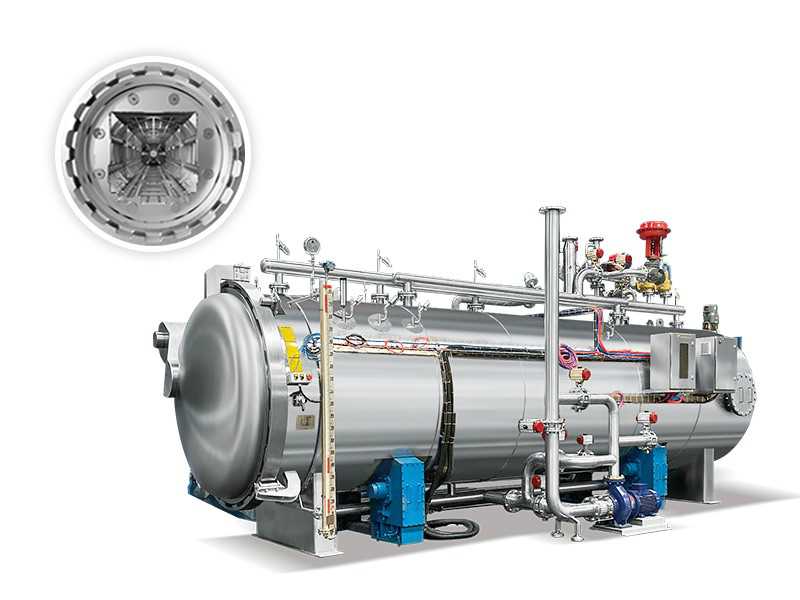
Commercial sterility is a condition achieved through appropriate processing in which microorganisms capable of reproducing under the intended storage and distribution conditions, including those of public health significance, are controlled to the required level. It does not mean that every microorganism has been destroyed. The objective is the level of microbiological stability required for the specific product and its intended storage conditions.
Under the low-acid canned food regulations published by the U.S. Food and Drug Administration (21 CFR Part 113), commercial sterility of thermally processed low-acid foods means a condition achieved by the application of heat that renders the food free of viable microorganisms, including spores, capable of reproducing in the food under normal non-refrigerated conditions of storage and distribution. Regulatory definitions like this one are the technical backbone of the term, and manufacturers exporting shelf-stable foods should confirm the exact definition that applies in their destination market.
Commercial Sterility vs. Absolute Sterility
| Comparison | Commercial Sterility | Absolute Sterility |
|---|---|---|
| Main objective | Meet safety and stability requirements under intended storage conditions | Eliminate all viable microorganisms |
| Key considerations | Target microorganisms, storage conditions and product stability | All viable microorganisms |
| Food processing application | Commonly applied to shelf-stable, thermally processed foods | Generally not the practical target of commercial food retort processing |
| Process intensity | Tailored to product risk and shelf life needs | Would require far more severe heat, damaging food quality |
For food manufacturers, commercial sterility focuses on achieving the required safety and stability under real-world production, storage and distribution conditions, while preserving product quality as much as possible.
Why Does Commercial Sterility Matter?
Commercial sterility affects more than food safety. It also influences shelf life, product quality, and storage requirements.
Food safety: Controls target pathogens and relevant heat-resistant spore-forming microorganisms.
Shelf life: Reduces the risk of spoilage, package swelling, and other microbiological changes.
Product quality: Helps balance microbial inactivation with the retention of flavor, color, and texture.
Storage and distribution: Supports ambient storage and distribution when the product, process, and packaging meet the applicable requirements.
Commercial sterility does not mean that a product can be stored indefinitely. Actual shelf life also depends on formulation, packaging integrity, and storage conditions.
Target Microorganisms Behind Process Design
Thermal process schedules are designed around the most heat-resistant microorganisms that can survive in the product and its packaging. Two groups matter most in commercial sterilization in food processing.
Pathogens of Public Health Significance
Clostridium botulinum, a spore-forming bacterium that can produce a deadly toxin, is the primary safety driver for low-acid canned foods. The botulinum cook, often described as a 12-decimal reduction (12D), reduces the probability of surviving spores to an extremely low level. This concept has been a standard basis of low-acid thermal process design for decades, and it explains why process schedules for low-acid foods are treated so strictly.
Spoilage Microorganisms
Heat-resistant spoilage organisms, such as thermophilic spore formers like Geobacillus stearothermophilus, may survive a botulinum cook but cannot multiply under proper storage conditions. Process design must therefore balance a safe botulinum cook with an adequate spoilage cook for the product and its intended storage temperature. This is why commercial sterility requirements can differ between a product stored in a warm warehouse and one stored in cooler conditions.
Acidity Changes the Risk Level
Products with pH above 4.6 are classified as low-acid and require the most rigorous thermal processing. Acidic foods, such as fruit products below pH 4.6, generally need milder processes because the acidity itself inhibits spore growth. Knowing the product's pH classification is therefore one of the first steps in establishing a commercial sterility requirement.
What Factors Affect Commercial Sterility?
Commercial sterility depends on a scientifically established and validated thermal processing schedule, rather than temperature settings alone.
| Key factor | Impact on processing |
|---|---|
| Food characteristics | pH, viscosity, particle size and formulation affect microbial risks and heat penetration. |
| Temperature and time | Work together to determine the microbial inactivation achieved during thermal processing. |
| Packaging format | Packaging materials, design and seal integrity affect process suitability and product stability. |
| Process validation | Confirms that the scheduled process can meet the product's safety requirements. |
| Storage conditions | Influence product stability and the achievable shelf life. |
For example, low-acid foods generally require careful control of heat-resistant bacterial spores. Thick sauces and products containing solid particles may require specific heat penetration studies to determine how heat reaches the product's slowest-heating region. As a result, the same retort sterilization parameters should not be applied indiscriminately to different products.
How Is a Retort Sterilization Process Evaluated?
When using a food retort for thermal processing, reaching the set temperature does not, by itself, confirm commercial sterility. Manufacturers need to consider the validated scheduled process, actual operating records, package seal integrity, and appropriate microbiological verification measures.
Understanding the F₀ Value
The F₀ value is commonly used to express the equivalent lethal effect of a thermal process in terms of a reference temperature of 121.1°C. In simple terms, it converts the full time-temperature profile of a retort cycle into a single number that describes how much heat lethality the product received. However, the required process target depends on the food formulation, target microorganisms, and validation results. A single F₀ value should not be treated as a universal standard for all food products.
Heat Distribution, Heat Penetration, and Verification
Process evaluation generally follows three connected steps:
Heat distribution study: Confirms that the retort chamber heats uniformly and identifies the cold zones of the vessel.
Heat penetration study: Measures how fast heat reaches the slowest-heating point inside the actual product and packaging.
Microbiological verification: Uses inoculated packs or biological indicators to confirm that the scheduled process achieves the required inactivation.
Uniform heating inside the vessel makes each of these steps more predictable. Retort systems with forced convection, such as water spray and steam-air designs, circulate the heating medium to reduce temperature differences inside the chamber, which supports more consistent heat delivery to every package.
Export and Regulatory Requirements
For exported products, manufacturers should also confirm the applicable regulations and processing requirements in the destination market, taking into account the product category and packaging format. International food standards, such as the Codex Alimentarius code of hygienic practice for low-acid and acidified low-acid canned foods, provide a common reference, while the regulatory framework of the destination country defines the legal requirements.
Retort Technologies Used to Achieve Commercial Sterility
Several batch retort technologies are used in commercial sterilization in food processing, and each handles the heating medium differently. The choice affects heating uniformity, cycle time, energy use, and the packaging formats the line can run.
| Retort type | Heating principle | Typical use |
|---|---|---|
| Water spray retort | Hot water is sprayed through nozzles over the packages; steam heats the circulating water | Rigid cans, glass jars, plastic bottles and pouches under counter-pressure |
| Steam-air retort | Steam mixed with air by a fan; pressure controlled independently of temperature | Flexible pouches and semi-rigid packs that need counter-pressure |
| Steam retort | Direct steam heating of the chamber | Rigid cans in classic still processing |
| Rotary retort | Packages rotate slowly during the cycle for faster, more uniform heat transfer | High-viscosity products, large packages, particulate foods |
| Water immersion retort | Packages are submerged in heated water, often with cascade or agitation | Products needing gentle, uniform heating |
Regardless of technology, the key to commercial sterility is not simply completing a heat treatment cycle. It is ensuring that a validated thermal process is consistently applied in routine production and that package integrity is maintained after processing. These considerations are central to the planning and control of retort sterilization for shelf-stable foods.
To see how these technologies compare in practice, buyers can review representative retort machines from the same manufacturer:
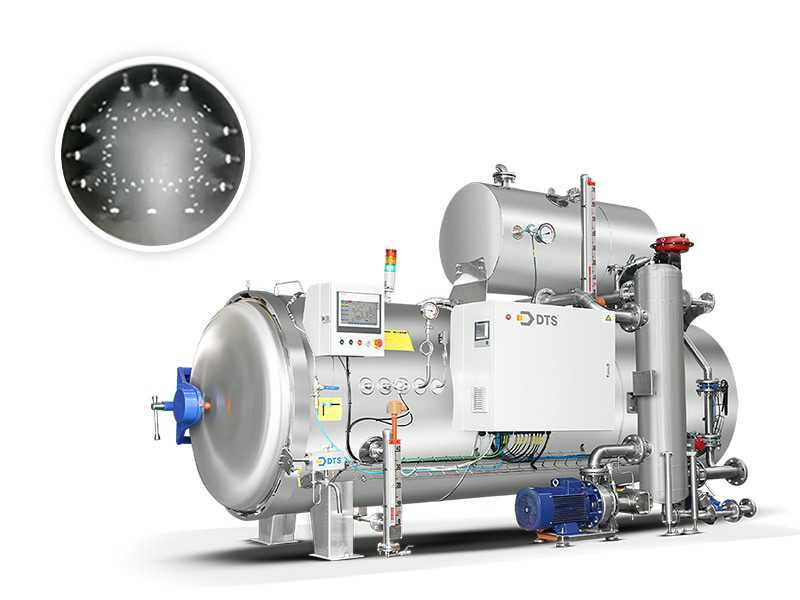
Water Spray Retort Machine
Counter-pressure water spray retort with heat-exchanger heating, spray nozzles, and precise temperature and pressure control for cans, jars, bottles and pouches.
View Product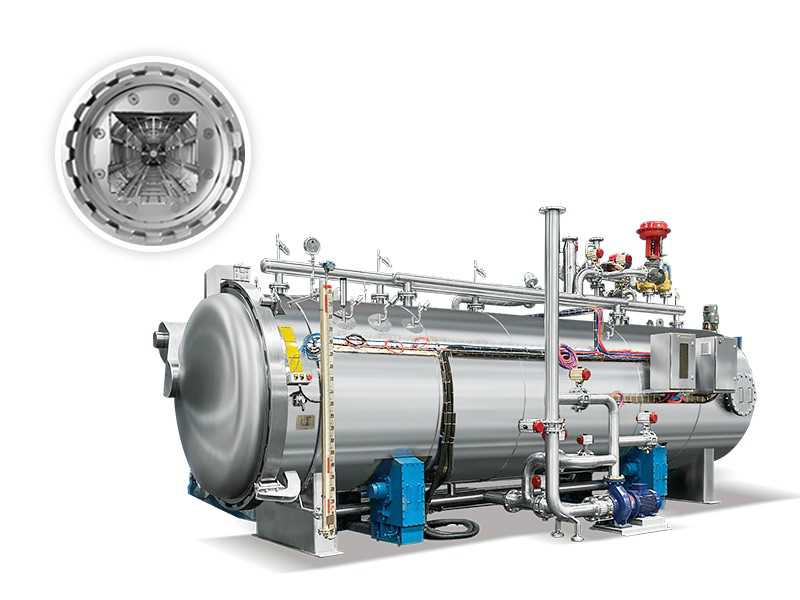
Rotary Retort Machine
Rotary retort with 360° slow rotation for faster, more uniform heat transfer, suited to high-viscosity products and large packages.
View Product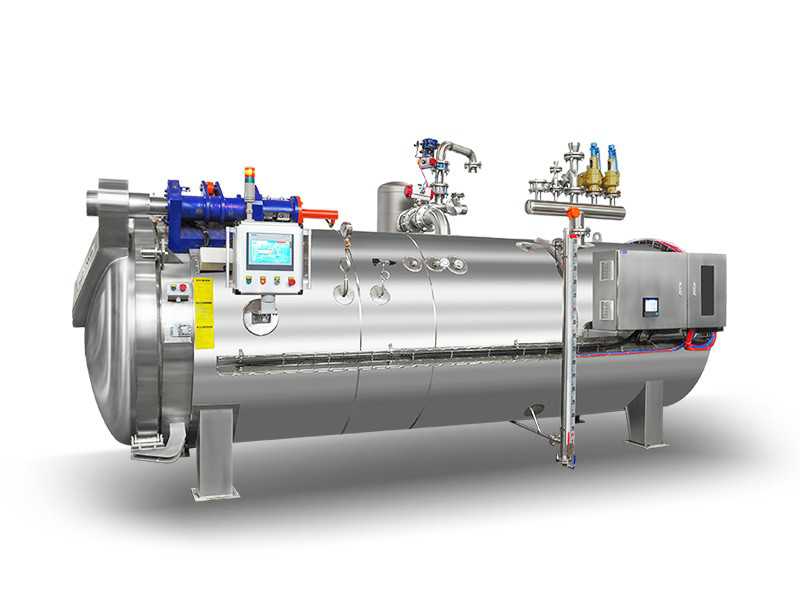
Steam Air Retort Machine
Steam-air retort with forced convection fan, ±0.3°C temperature control, and independent pressure control for flexible and semi-rigid packaging.
View ProductPlanning a Retort Sterilization Line?
DTS designs and manufactures batch retorts and automated sterilization systems with 26 years of experience in thermal processing, delivering to customers in more than 56 countries. Vessels can be built to comply with ASME, CE-PED, FDA, and other regional standards. Send an inquiry with your product type, packaging format, and capacity needs for a process-oriented recommendation.
Get a QuoteView Retort Machines →Conclusion
Commercial sterility is the condition that makes shelf-stable thermally processed food safe and stable under normal storage, and it is achieved through validated thermal processes rather than temperature settings alone. Manufacturers should understand the target microorganisms for their products, the factors that influence heat penetration, and the meaning of the F₀ value, then confirm the regulatory requirements of their export markets. With a validated schedule, uniform retort heating, and sound packaging integrity, commercial sterility becomes a reproducible production standard.
For buyers looking for a dependable retort machine manufacturer, DTS offers batch retort systems from water spray, steam-air, and rotary designs to automated production lines, backed by engineering, installation, and validation support.
FAQ
Commercial sterility is a condition achieved by appropriate thermal processing in which microorganisms that could reproduce under the product's intended storage conditions, including those of public health significance, are controlled to a safe level. It is the standard used for shelf-stable canned and packaged foods.
No. Commercial sterility is not absolute sterility. Some heat-resistant spores may remain, but they are unable to grow under the product's intended storage and distribution conditions, so the food remains safe and stable.
Typical commercial sterilization in food processing uses retort temperatures in the range of about 110–135°C, depending on the product, packaging, and validated process. The exact schedule is determined by heat penetration studies, not by a fixed temperature.
F₀ expresses the equivalent lethal effect of a thermal process at a reference temperature of 121.1°C. It summarizes the full time-temperature profile into a single number, but the required target varies with the product and validation results.
Because heat penetration depends on pH, viscosity, particle size, and packaging. A thick sauce in a large package heats more slowly than a thin broth in a small can, so each product needs its own validated process target.
Common batch retort types include water spray, steam-air, steam, rotary, and water immersion systems. Each handles the heating medium differently and suits different packaging formats and product characteristics.
References and Notes
FDA — regulatory definition of commercial sterility for thermally processed low-acid foods and related food safety guidance: https://www.fda.gov/food.
Codex Alimentarius — international food standards and codes of hygienic practice, including canned food processing: https://codex.fao.org/home.
IFT (Institute of Food Technologists) — professional food science resources on thermal processing and food safety: https://www.ift.org/.
The 12D botulinum cook and the pH 4.6 low-acid threshold are long-established industry concepts in low-acid thermal process design; specific targets must come from validated process schedules.
Typical retort operating ranges (110–135°C), the F₀ reference temperature (121.1°C), and heat distribution / heat penetration / microbiological verification terminology follow common industry practice and regulatory guidance; actual values depend on the product and process validation.
Company information (26 years of experience, 7,500+ batch retorts delivered, customers in 56+ countries, 100+ turnkey projects, ±0.3°C temperature control on steam-air systems, certification compliance ASME / CE-PED / FDA / CRN / DOSH / KEA) is stated according to DTS and was not independently verified by this article: https://www.retort-machine.com/About-DTS.html.
Product images are from the DTS website and are used for illustration of the referenced product lines.


