


Why Do Canned Foods, Ready Meals and Beverages Need Thermal Processing?
Thermal processing is the controlled application of heat to a sealed food product so that it remains stable and safe without refrigeration. The reason differs slightly for canned foods, ready meals and beverages, but the underlying microbiology and heat transfer rules are the same.
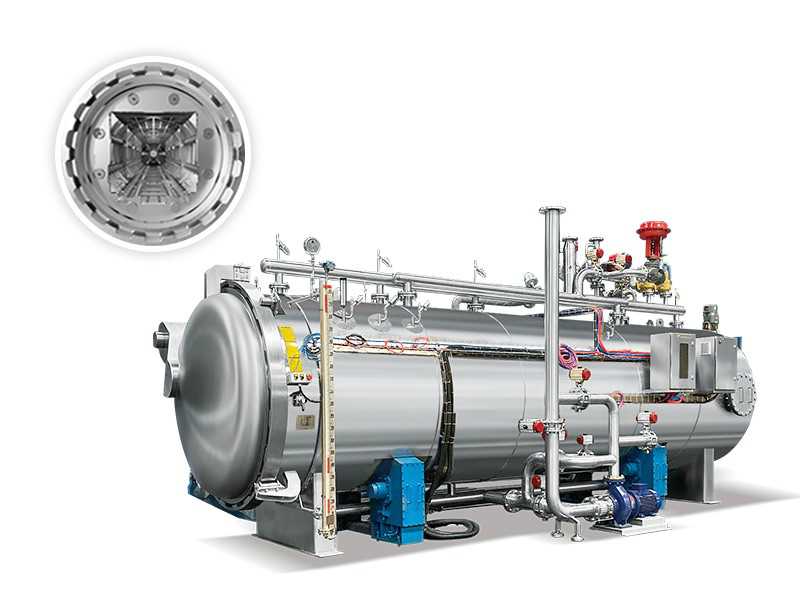
Key Takeaways
Heat treatment aims at commercial sterility, not absolute sterility, under defined storage and distribution conditions.
Sealed low-acid foods above pH 4.6 with water activity above 0.85 need validated schedules aimed at heat resistant spores.
The cold spot inside the container, not the retort setpoint, determines the lethality actually delivered.
Formulation, viscosity, particle size and pack geometry change heat penetration and can invalidate an old schedule.
Canned foods, ready meals and beverages share the same science but need different retort formats and process controls.
What Thermal Processing Is Designed to Achieve
Thermal processing is a validated heat treatment applied after a food has been sealed in a hermetic container. The goal is to reduce the microbial population to a level that will not grow under normal non refrigerated storage, while keeping quality acceptable. That combination is why heat treatment is described as a process rather than a single temperature. General food safety guidance treats heat treatment as one control among several, alongside formulation, packaging and hygiene, rather than as a standalone fix for poor production practice, as reflected in public food safety guidance.
Commercial sterility is a defined condition
For shelf stable canned foods, the regulatory endpoint is commercial sterility. Under 21 CFR 113.3, a commercially sterile food is free of microorganisms capable of reproducing under normal non refrigerated storage and distribution, and free of viable microorganisms of public health significance. The same definition frames federal controls for thermally processed low-acid foods. This wording matters because it sets a practical condition tied to storage, not a claim that every microbial cell has been removed.
Why heat resistant spores drive the process
Most vegetative bacteria are killed by comparatively mild heat, but some bacteria form spores that tolerate much higher temperatures. In low-acid sealed foods, Clostridium botulinum spores are the public health concern that shapes thermal process design. Acid foods and acidified foods follow a different route, because acidity suppresses many spoilage organisms, though yeasts, molds and acid tolerant bacteria still need control. The temperature and microbial growth guide explains how organisms respond differently to heat and why a single setpoint cannot serve every product.
Why Canned Foods Need Thermal Processing
Canned vegetables, meats, poultry, fish and soups are typically low-acid foods with a finished equilibrium pH above 4.6 and water activity above 0.85. Sealed in a can, they provide a moist, low-oxygen environment in which surviving spores can grow if the heat treatment is insufficient. Thermal processing closes that gap by delivering a calculated lethal effect at the slowest heating point inside every container. For low-acid canned foods, a 12D reduction of C. botulinum spores is a widely taught public health benchmark; it is a design reference, not a universal scheduled process for every recipe.

The cold spot decides the schedule
A retort controller may show a stable temperature, but the product at the geometric or thermal centre of the can heats later. Lethality calculations use that cold spot history, because microbial reduction depends on the temperature actually reached inside the food. D-value, z-value and F₀ translate that history into a comparable number: D-value is the time for a one log reduction at a stated temperature, z-value describes how that time changes with temperature, and F₀ expresses the whole heating and cooling curve as equivalent minutes at 121.1°C. The guide to D, z and F values sets out the calculation framework in detail.
Why Ready Meals Need Thermal Processing
Ready meals add solids, sauces and varying piece sizes to the same problem. A tray of pasta with meat pieces does not heat like a can of uniform liquid, because conduction through solids is slower than convection in a thin sauce. A schedule that works for one fill weight or particle size may leave the centre of a denser meal underprocessed. Thermal processing for ready meals is therefore built around heat penetration data for the exact recipe and pack, with agitation or rotation used where the product benefits from movement inside the container.

Recipe and pack changes require a fresh review
Viscosity, solid content, particle size, fill weight and initial temperature all move the cold spot. Changing from a still retort to a rotary retort changes the heat transfer condition as well. When any of those variables changes, the earlier thermal process should be reassessed by qualified process personnel rather than reused on the assumption that the retort setpoint is unchanged. The retort systems developed for ready meals and porridge illustrate how product movement is built into the equipment choice.
Why Beverages Need Thermal Processing
Beverages and liquid dairy products are often handled by continuous or batch heat treatment before or after filling. When the product is sealed in a can or bottle and sold without refrigeration, thermal processing must account for the container as well as the liquid. Heat moves through a low viscosity beverage mainly by convection, so the slowest heating zone can sit close to the container wall or in a cold pocket created by poor circulation. Overprocessing is a real cost here, because flavour, colour and nutrients degrade with excessive heat even while microbial safety improves.

Acid beverages and low-acid dairy are not the same case
Fruit juices and acidified drinks sit below the pH 4.6 boundary and mainly require control of yeasts, molds and acid tolerant organisms. Milk based drinks and neutral pH beverages fall into the low-acid group and need a validated spore control schedule. The guide to food pH and retort requirements explains why a pH reading alone cannot calculate a schedule, and federal controls for acidified foods require documented equilibrium pH and control methods.
Review Retort Options for a Defined Product
Published specifications and technical documentation can be requested before a retort configuration is selected.
How Thermal Processing Parameters Are Established
A defensible thermal process starts with the organism of concern and ends with a measured temperature history at the cold spot. Three numbers are used to describe that history and the microbial response: D-value for the time needed for a 90% reduction at a given temperature, z-value for the temperature change that shifts D-value by a factor of ten, and F₀ for the total lethal effect expressed as equivalent minutes at 121.1°C with z equal to 10°C. Heating and cooling both contribute, which is why a longer cycle is not automatically a safer or better cycle.
Under the common z equal to 10°C model, one minute at 131.1°C contributes ten times the calculated lethality of one minute at 121.1°C. That illustration explains why a heat cycle cannot be judged from time and setpoint alone. Real products also need heat penetration studies, defined critical factors, competent process authority review and batch records. These steps turn calculated lethality into a scheduled process that can be reproduced on the plant floor.
What Goes Wrong Without a Controlled Thermal Process
Underprocessing leaves a sealed product with a public health risk or a shorter than intended shelf life. Swollen cans, sour odours, off flavours and spoilage organisms are visible signs, but a product can look normal while the safety margin is inadequate. Overprocessing creates a different loss: texture softens, colours dull, nutrients degrade and energy use rises. Package integrity can also fail if pressure control and cooling are not managed, particularly for glass jars and flexible packs. Thermal processing is therefore a balance between enough lethality and the least quality damage needed to reach it.
Matching the Retort Format to the Product
Retort equipment changes how heat reaches the product. Water spray systems distribute heated water over cans, bottles and trays; rotary retorts move liquid and semi liquid products to shorten heat penetration time; steam retorts suit many low-acid canned goods where a firm cycle is acceptable. The three formats below are drawn from the published catalogue and show how heat treatment is adapted to packaging and product consistency.
Water Spray Retort
Sprays heated water across packs for uniform heat distribution with touchscreen process control.
View Product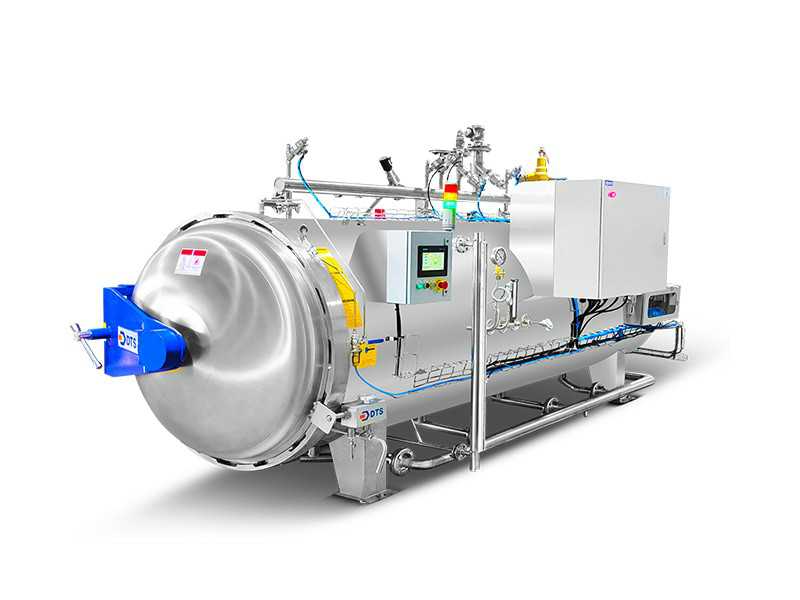
Rotary Retort
Rotates sealed containers to agitate liquid and semi liquid products during the heat cycle.
View Product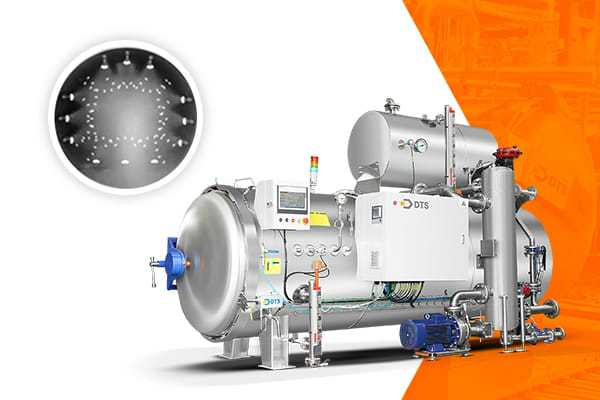
Steam Retort
Steam autoclave configuration for low-acid canned foods that require validated high-temperature cycles.
View ProductHow to Specify Thermal Processing Equipment
A practical specification should begin with the product, not the machine:
Record the finished equilibrium pH and water activity for every recipe in scope.
Define the package format, fill weight, dimensions and expected cold spot location.
State the target lethality or scheduled process, including critical factors and cooling limits.
Confirm heat recovery, utility loads and batch or continuous handling requirements.
Request validation support, documentation and reference cases before placing an order.
Teams that work through this list can compare a water spray, rotary and steam configuration on the same basis. It also keeps process decisions separate from decorative or marketing claims about a food product.
| Product category and thermal processing objective | Main microbiological concern | What the process must control | Common retort format |
|---|---|---|---|
| Low-acid canned vegetables and meats | Heat resistant spores | Cold spot lethality and hermetic seal integrity | Steam or water spray retort |
| Ready meals and porridge | Spores in particulates and viscous sauce | Heat penetration through solids and agitation | Rotary or water spray retort |
| Beverages in cans and bottles | Yeasts, molds or spores depending on pH | Convection uniformity and flavour retention | Water spray or continuous system |
| Acid and acidified foods | Acid tolerant spoilage organisms | Equilibrium pH and acid distribution | Mild heat treatment |
| Pet food and wet food | Spores in protein rich formulations | Fat, protein and pack size effects on heating | Rotary or water spray retort |
| Reference parameter | Published value | How it is used | Qualification |
|---|---|---|---|
| Acid and low-acid boundary | pH 4.6 | Separates acidified foods from low-acid canned foods | Regulatory threshold, not a process calculation |
| Low-acid water activity criterion | greater than 0.85 | Used with pH to define low-acid canned foods | Subject to applicable definitions and exclusions |
| F₀ reference temperature | 121.1°C with z equal to 10°C | Converts temperature history to equivalent minutes | Conventional reference condition |
| C. botulinum D value example | 0.21 min at 121.1°C | Illustrates a one log reduction at that temperature | Textbook teaching value, not product data |
| 12D public health benchmark | about 2.52 min at 121.1°C | Reference for low-acid canned food design | Not a scheduled process for a specific recipe |
Compare Retort Configurations and Request Samples
Case references, product configurations and evaluation options can be discussed against a defined food category and package format.
Conclusion
Canned foods, ready meals and beverages need thermal processing because sealing a food removes the protection of refrigeration and fresh handling. The required heat treatment depends on acidity, water activity, the organism of concern and the way heat moves through the exact pack. Commercial sterility is the practical target, F₀ and related values describe the delivered lethality, and heat penetration studies turn those concepts into a reproducible schedule. Selecting the retort format is the final step, not the first one.
For readers comparing thermal processing equipment manufacturers, DTS provides published equipment specifications, technical guides, case references and direct inquiry channels for further evaluation.
FAQ
Why is thermal processing required for canned foods?
A hermetically sealed can stored without refrigeration can support surviving spores if they are not controlled. Thermal processing delivers validated heat to the cold spot so the product reaches commercial sterility under defined storage conditions.
Does thermal processing make food completely sterile?
No. For shelf stable foods the accepted endpoint is commercial sterility, meaning no microorganisms capable of reproducing under normal non refrigerated storage and no viable organisms of public health significance.
Why do ready meals need a different thermal process from canned vegetables?
Ready meals contain solids, sauces and pieces of different sizes. Heat moves more slowly through those solids, so the cold spot and the need for agitation differ from a more uniform canned product.
How does pH change thermal processing requirements?
The pH 4.6 boundary separates acid and acidified foods from low-acid canned foods. Low-acid products need a validated schedule aimed at heat resistant spores; acid products mainly need control of yeasts, molds and acid tolerant organisms.
What does F₀ measure in thermal processing?
F₀ expresses the whole heating, holding and cooling history as equivalent minutes at 121.1°C with a z value of 10°C. It summarises cumulative lethality, but it does not replace heat penetration studies or process validation.
References and Notes
federal controls for thermally processed low-acid foods — supports the commercial sterility definition, the pH 4.6 and water activity 0.85 criteria and scheduled process requirements (ecfr.gov, accessed 2026-11-25)
federal controls for acidified foods — supports the requirement to document equilibrium pH and control methods (ecfr.gov, accessed 2026-11-25)
public food safety guidance — supports the description of heat treatment as one control within a broader food safety system (cdc.gov, accessed 2026-11-25)
Source guides on the manufacturer site: D-value, z-value and F₀ calculation guide; food pH and retort requirement guide; temperature and microbial growth guide. Product formats and descriptions come from the water spray, rotary and steam retort pages.
Long tail topics covered: commercial sterility, retort processing, heat penetration and shelf stable beverages.
Data notes: pH 4.6 and water activity 0.85 are regulatory thresholds for low-acid canned foods. The D value of 0.21 min, the 12D benchmark of about 2.52 min and the z equal to 10°C reference are textbook teaching values, not product specific process parameters. Retort selection depends on the exact recipe and package.


